
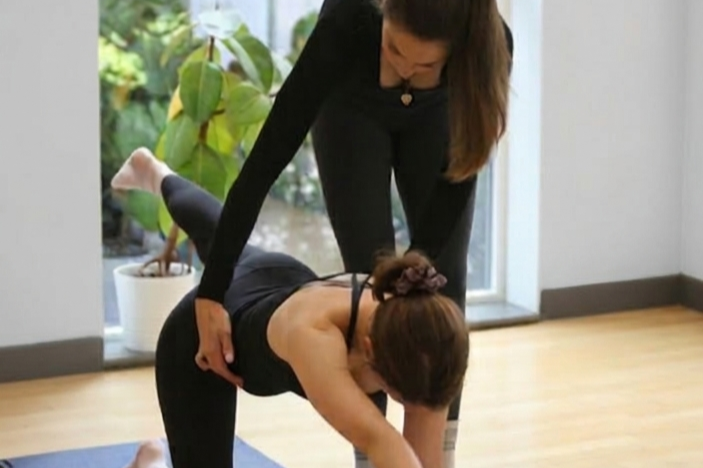
Moving gently after pregnancy loss or birth trauma - A guide to reconnecting with your body, kindly and safely
This resource is for general wellbeing and education. It is not a substitute for medical advice. If you have any concerns about your recovery, or are unsure whether movement is right for you right now, please speak with your GP or healthcare provider.
This guide has been created with care to support you as you begin to move your body again.
There is no right timeline, no target to reach, and no pressure to perform. Our movement sessions are here simply an invitation, to reconnect, to breathe, and to feel at home in your body again, in whatever small way feels right for you today.
Before you begin
Everyone's recovery is different, physically and emotionally, and only you know how you feel. There is no fixed point at which you should be ready to move, and no expectation from us that you will be. As a general guide, gentle movement may feel possible once:
Bleeding has reduced or settled
You are not experiencing significant pain
You feel a sense of readiness, even a small one, to reconnect with your body
If you have ongoing symptoms or pre-existing conditions, have been advised to rest, or are simply not sure, check in with your doctor first. There is no rush. Coming back to this when you feel ready is always the right choice.
Start gently
The starting sessions inside Intara are designed with exactly this in mind - short, slow, and led by breath rather than effort. You will not be asked to push, perform, or keep up. Each session is an invitation, not an instruction.
Begin with just 5 to 10 minutes. Focus on how you feel, not how much you do. Build gradually, and only if it feels right. Small and slow is not falling behind it is exactly where you need to be.
Listen to your body
Your body will tell you what it needs. On some days that might be movement, on others it might be rest. Both are part of recovery, and both deserve to be honoured.
Each of our movement sessions include guidance on when to modify, slow down, or pause - you are never left to figure it out alone. Alongside that, trust your own signals.
Pause or reduce what you are doing if you notice:
Pain anywhere in your body
Dizziness, faintness, or chest discomfort
A noticeable increase in bleeding
A sense of feeling unwell, depleted, or not quite right
Feeling overwhelmed, triggered, or disconnected from your body
Pausing is not giving up. It is you taking care of yourself, which is exactly what this space is for.
When to contact your doctor
Please seek medical advice promptly if you experience any of the following:
Heavy or prolonged bleeding, or large clots
Severe or worsening pain
Fever, chills, or signs of infection
A red, swollen, or painful leg
Difficulty breathing or chest pain
Any symptom that concerns you, however small it seems
If you are worried, please contact your GP or call NHS 111.
Trust yourself. If something does not feel right, it is always worth checking.
Supporting your whole recovery
Movement is one part of recovery. Alongside it, try to:
Drink water regularly and eat nourishing foods when you can
Rest without guilt - your body is doing significant work even when you are still
Be patient with yourself on the harder days
Recovery rarely follows a straight line. You may feel stronger one day and more fragile the next. That is not a setback - it is simply how healing works. Even the smallest step forward matters
When you feel ready, we are here. Your first session is waiting whenever you are.
For more detailed information on contraindications, please read our Health Information