
Chapter 3: Finding Ground
Welcome to chapter three.
Movement
All of your movement sessions have been specifically built to support your healing body. In every chapter you’ll find that movement sessions are divided into two types, strengthening, for days when you feel stronger and like you want to move, and focused which target specific areas where you may be holding tension or experiencing stiffness.
Everything in this chapter has been designed to start gently. You'll notice that many of the exercises include progressions and regressions, allowing you to adapt each session to how you feel on any given day.
There is no right way to work through these sessions, and you do not need to complete an entire session in one go. Pilates is a practice, and much of its value comes from returning to it again and again. Rather than working through each session once, we encourage you to revisit them throughout these first few weeks, noticing how they feel in your body each time.
If you're not sure where to begin, start with the focused session for your neck and shoulders. Many of us carry tension, stress, and grief in our neck here, and even one gentle session can help to start to ease it.
This video is G1M2
This is the first main video G1M1
This is G1F1
This is G1F2
Your Toolkit
Grief is not just something you feel. It's something that exists in your mind, churning relentlessly, and often in ways that are hard to make sense of. Thoughts about what happened, what you could have done differently, what the future looks like now. They arrive uninvited and they can be exhausting. While it may feel random, our thinking tends to follow recognisable patterns; catastrophising, all-or-nothing thinking, replaying what happened on a loop. These aren't signs that something is wrong with you. They're normal responses to grief and trauma. But once you can name them, they lose some of their power.
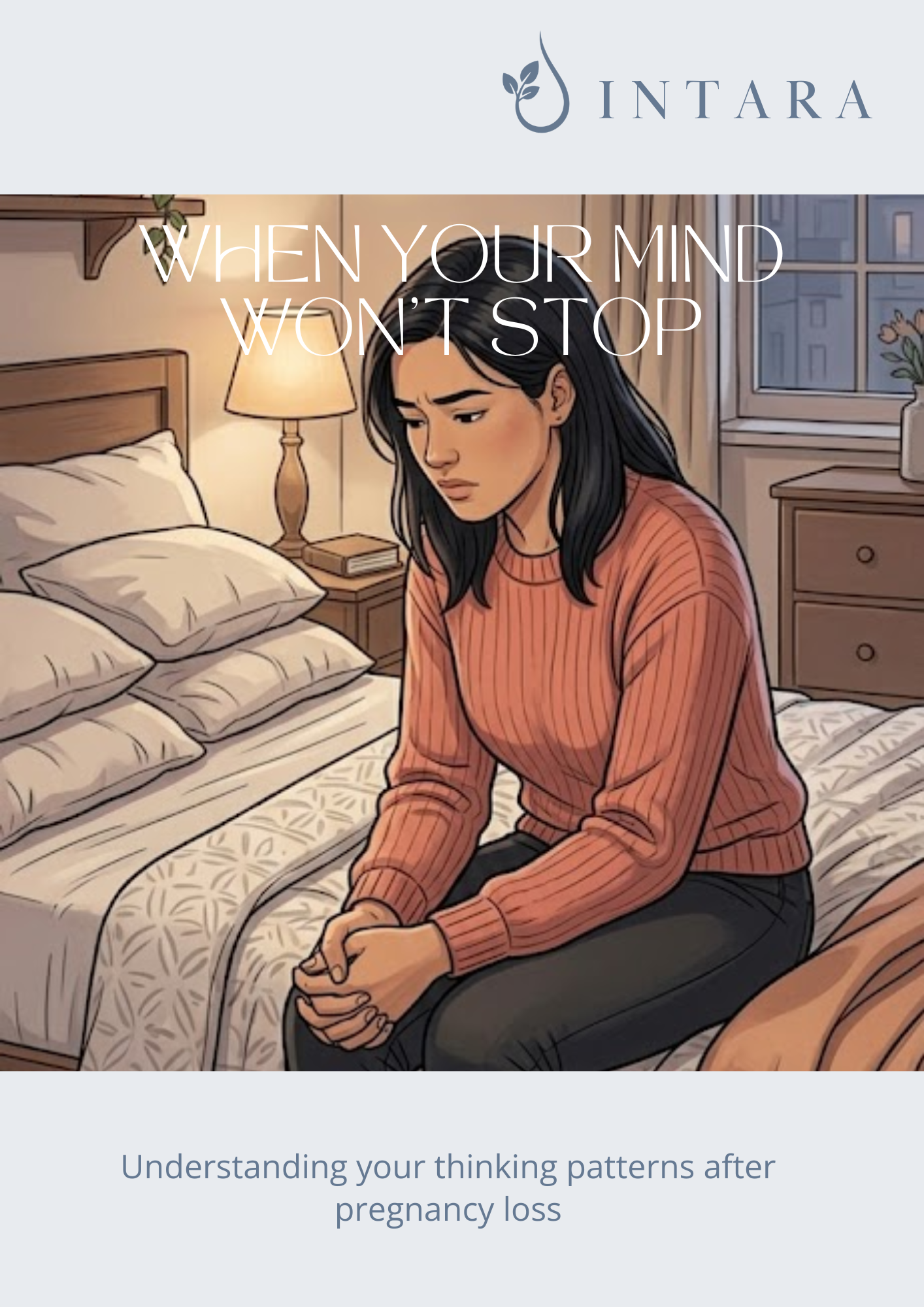
Dr Anna Galloway shares practical tips on managing negative or intrusive thoughts so that they can start to lose their power.
Understanding common thinking styles can help you to identify the ones you tend toward. This guide offers practical, evidence-based ways to gently shift them so they lessen their hold on you.
Download it, keep it somewhere accessible, and return to it whenever your thoughts feel hard to manage.